



PDE6
PDE6 (phosphodiesterase 6) is the principal cGMP-hydrolyzing effector of the vertebrate phototransduction cascade and is highly enriched in retinal photoreceptor outer segments, where it converts light-activated signaling into changes in intracellular cGMP concentration and visual signal transmission[1][2]. Mechanistically, PDE6 regulates cGMP turnover downstream of photoreceptor activation, and its catalytic activity promotes closure of cGMP-gated ion channels, a central step in visual transduction[1][3]. The PDE6 holoenzyme contains catalytic and inhibitory subunits that function together to control photoreceptor sensitivity and light responsiveness[1][2]. In disease contexts, genetic defects affecting PDE6 disrupt phototransduction and are strongly associated with inherited retinal degeneration, including retinitis pigmentosa and related photoreceptor disorders[4][5]. Experimental animal models carrying PDE6B mutations have demonstrated that reduced PDE6 expression or activity leads to retinal degeneration, establishing PDE6 as a key model system for studying photoreceptor survival and disease mechanisms[4]. Compared with related isoforms, rod photoreceptors express PDE6A/PDE6B catalytic subunits together with PDE6G, whereas cone photoreceptors express PDE6C together with PDE6H, highlighting specialized isoform composition in rod and cone visual pathways[2]. For experimental applications, PDE6 is frequently examined in studies of retinal disease mechanisms and pharmacology because several PDE5 inhibitors also inhibit PDE6, providing useful tools for investigating cGMP-dependent signaling and phosphodiesterase selectivity[6].
References:
- [1]. Cote RH. Photoreceptor phosphodiesterase (PDE6): activation and inactivation mechanisms during visual transduction in rods and cones. Pflugers Arch. 2021 Sep;473(9):1377-1391. doi: 10.1007/s00424-021-02562-x. Epub 2021 Apr 15. PMID: 33860373; PMCID: PMC8376765. et al. Photoreceptor phosphodiesterase (PDE6): activation and inactivation mechanisms during visual transduction in rods and cones. Pflugers Arch. 2021 Sep;473(9):1377-1391. [Content Brief]
- [2]. Lagman D, et al. Evolution and expression of the phosphodiesterase 6 genes unveils vertebrate novelty to control photosensitivity. BMC Evol Biol. 2016 Jun 13;16(1):124. [Content Brief]
- [3]. Cote RH, et al. Photoreceptor Phosphodiesterase (PDE6): Structure, Regulatory Mechanisms, and Implications for Treatment of Retinal Diseases. Adv Exp Med Biol. 2022;1371:33-59. [Content Brief]
- [4]. Muradov H, et al. Atypical retinal degeneration 3 in mice is caused by defective PDE6B pre-mRNA splicing. Vision Res. 2012 Mar 15;57:1-8. [Content Brief]
- [5]. Wong WM, et al. Monogenic Retinal Diseases Associated With Genes Encoding Phototransduction Proteins: A Review. Clin Exp Ophthalmol. 2025 Apr;53(3):260-280. [Content Brief]
- [6]. Cote RH. Characteristics of photoreceptor PDE (PDE6): similarities and differences to PDE5. Int J Impot Res. 2004 Jun;16 Suppl 1:S28-33. [Content Brief]
All Product Categories
-
PDE6 Related Products (22)
Related Products (22)

- 1
- 2
-
FPFT-2216
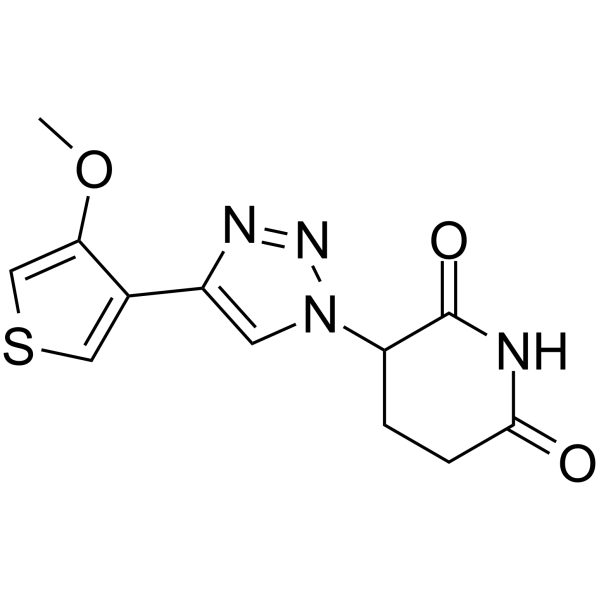 0 ImagesFPFT-2216 is an orally active Molecular glue degrader targeting IKZF1, IKZF3, CK-1α, and PDE6D, with a DC50 of 8 nM against PDE6D. FPFT-2216 mediates ubiquitin-proteasome degradation via the CRL4CRBN E3 ubiquitin ligase complex and interacts with the non-isoprenoid-binding region of PDE6D. FPFT-2216 activates the p53 signaling pathway, inhibits the CBM complex/NF-κB pathway, upregulates IL-2, suppresses IL-1β and IL-6, and induces tumor cell Apoptosis. FPFT-2216 exhibits anticancer activity against multiple myeloma and lymphoma. FPFT-2216 can be used in research related to multiple myeloma, lymphoma, acute lymphoblastic leukemia, acute myeloid leukemia, pancreatic ductal adenocarcinoma, non-small cell lung cancer, and gastric adenocarcinoma.
-
Avanafil
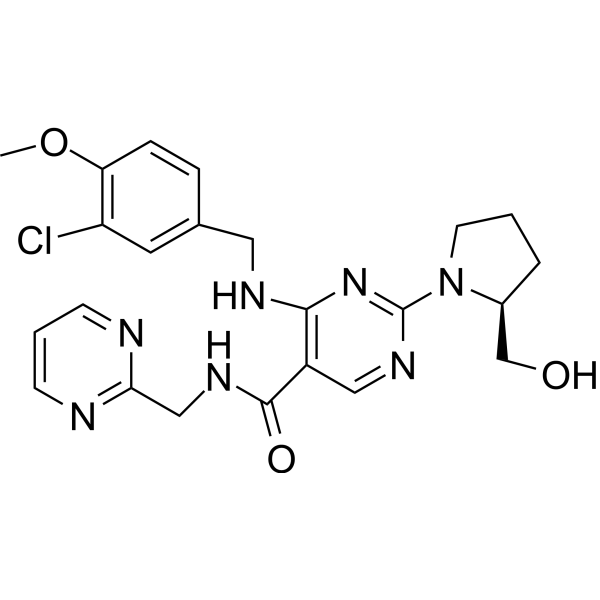 0 ImagesSynonyms: TA1790Avanafil (TA-1790) is a potent and selective phosphodiesterase-5 (PDE-5) inhibitor with IC50 values of 5.2 nM, 630 nM, 5700 nM, 6200 nM, 12000 nM, 27000 nM, 51000 nM and 53000 nM for PDE-5, PDE-6, PDE-4, PDE-10, PDE-8, PDE-7, PDE-2 and PDE-1, respectively. Avanafil activates NO/cGMP/PKG signaling-pathway to decrease loss in BMD, bone atrophy, and oxidative stress. Avanafil inhibits cyclic guanosine monophosphate (cGMP) hydrolysis and thus increases cGMP levels. Avanafil can be used for the research of erectile dysfunction and osteoporosis.
-
Vardenafil
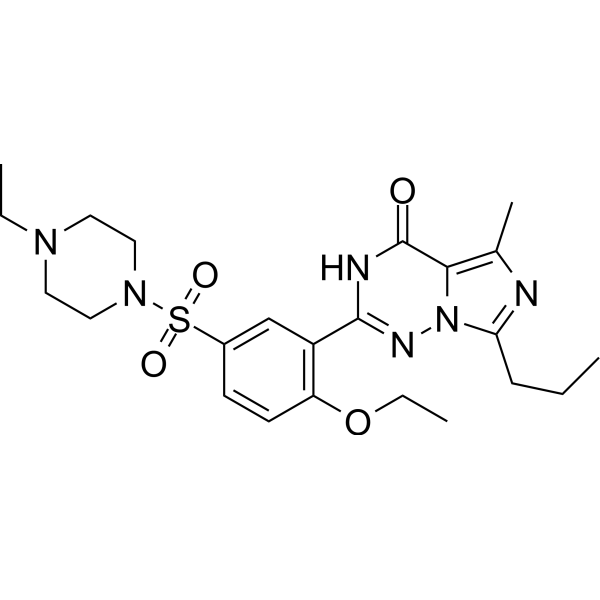 0 ImagesVardenafil is a selective and orally active inhibitor of phosphodiesterase-5 (PDE5), with an IC50 of 0.7 nM. Vardenafil shows inhibitory towards PDE1, PDE6 with IC50s of 180 nM, and 11 nM, while IC50s are >1000 nM for PDE3 and PDE4. Vardenafil competitively inhibits cyclic guanosine monophosphate (cGMP) hydrolysis and thus increases cGMP levels. Vardenafil can be used for the research of erectile dysfunction, hepatitis, diabetes[1]-[6].
-
Vardenafil hydrochloride
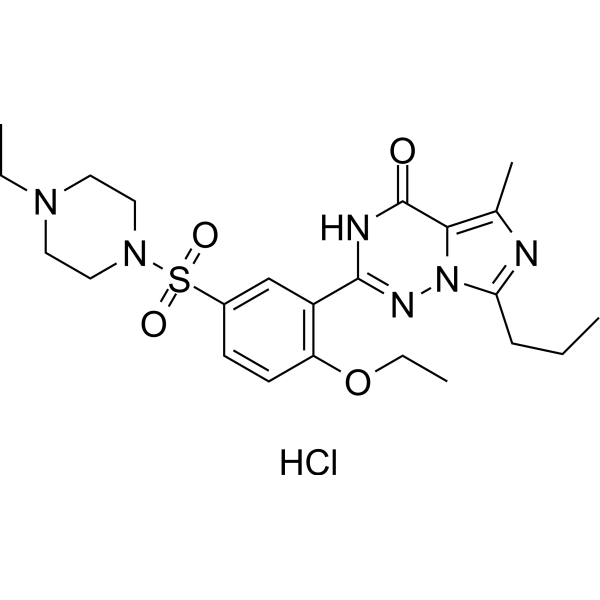 0 ImagesVardenafil hydrochloride is a selective and orally active inhibitor of phosphodiesterase-5 (PDE5), with an IC50 of 0.7 nM. Vardenafil hydrochloride shows inhibitory towards PDE1, PDE6 with IC50s of 180 nM, and 11 nM, while IC50s are >1000 nM for PDE3 and PDE4. Vardenafil hydrochloride competitively inhibits cyclic guanosine monophosphate (cGMP) hydrolysis and thus increases cGMP levels. Vardenafil hydrochloride can be used for the research of erectile dysfunction, hepatitis, diabetes[1]-[6].
-
TMX-4100
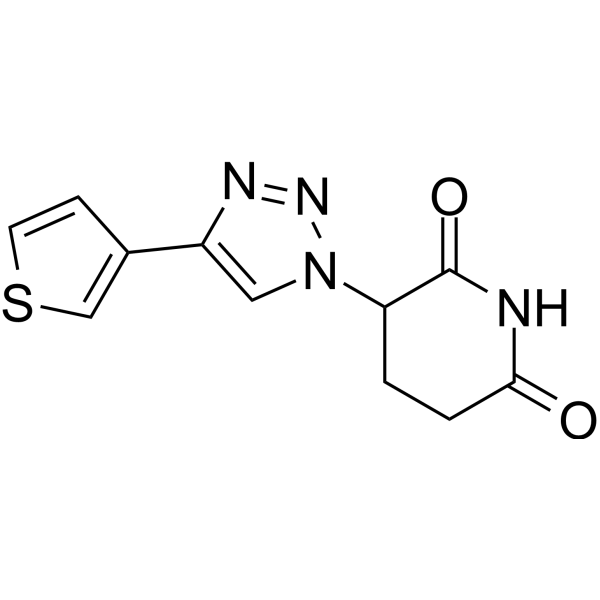 0 ImagesTMX-4100 is a selective phosphodiesterase 6D (PDE6D) degrader. TMX-4100 shows a high degradation preference for PDE6D with the DC50 values less than 200 nM in MOLT4, Jurkat, and MM.1S cells. TMX-4100 can be used for the research of multiple myeloma.
-
TMX-4113
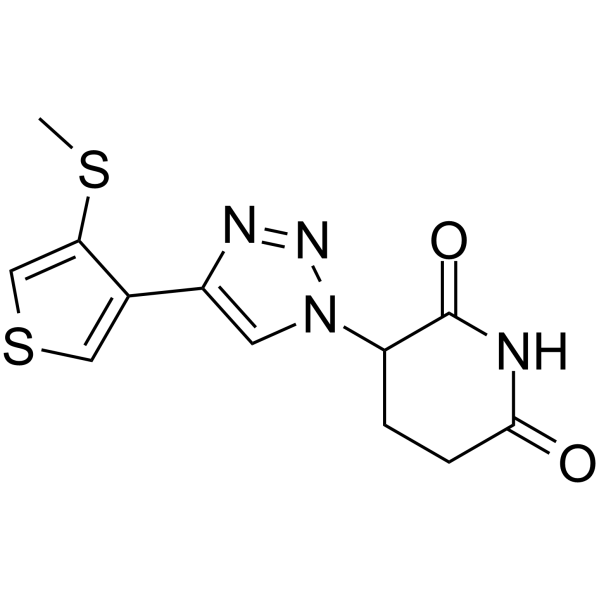 0 ImagesTMX-4113 is a FPFT-2216 (HY-145319) (Molecular glue) analog and degrader of PDE6D and CK1α. TMX-4113 does not inhibit the growth of KRASG12C-dependent cancer cells. TMX-4113 can be used in the research of multiple myeloma, pancreatic ductal adenocarcinoma, non-small cell lung cancer and gastric adenocarcinoma.
-
Vardenafil hydrochloride trihydrate
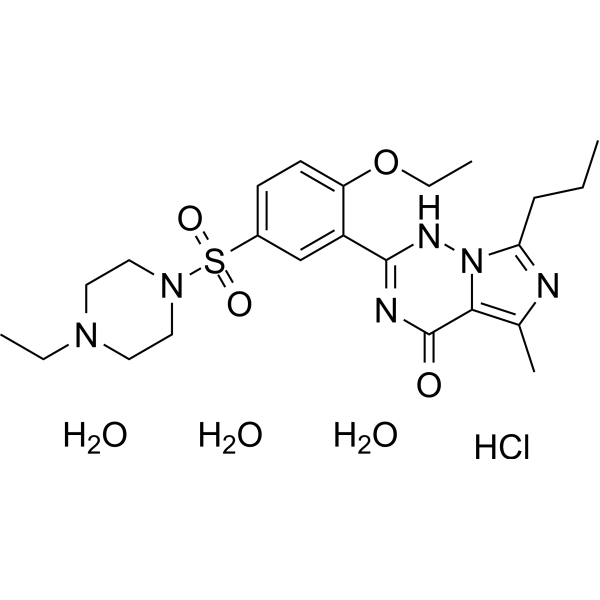 0 ImagesVardenafil hydrochloride trihydrate is a selective and orally active inhibitor of phosphodiesterase-5 (PDE5), with an IC50 of 0.7 nM. Vardenafil hydrochloride trihydrate shows inhibitory towards PDE1, PDE6 with IC50s of 180 nM, and 11 nM, while IC50s are >1000 nM for PDE3 and PDE4. Vardenafil hydrochloride trihydrate competitively inhibits cyclic guanosine monophosphate (cGMP) hydrolysis and thus increases cGMP levels. Vardenafil hydrochloride trihydrate can be used for the research of erectile dysfunction, hepatitis, diabetes[1]-[6].
-
T-0156
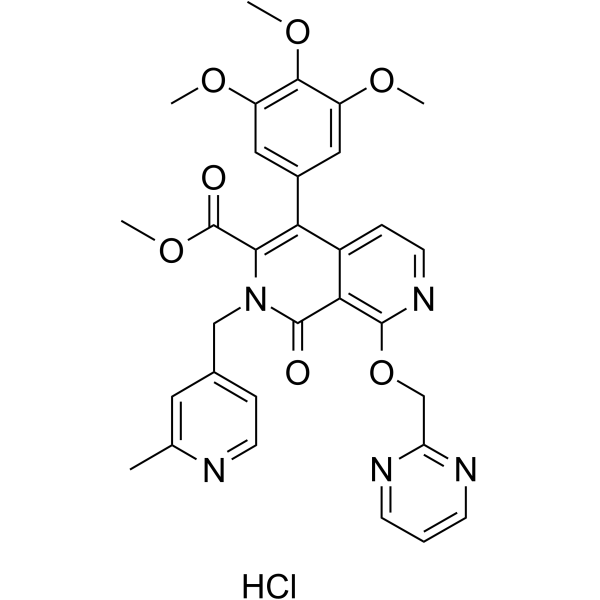 0 ImagesCat. No.: HY-105349CAS No.: 324572-93-2T-0156 is a potent and selective phosphodiesterase type 5 (PDE5) inhibitor. T-0156 specifically inhibits the hydrolysis of cyclic guanosine monophosphate (cGMP) by PDE5 in a competitive manner (IC50=0.23 nM). T-0156 inhibits PDE6 (IC50=56 nM) and has low potencies against PDE1, PDE2, PDE3, and PDE4 (IC50>10 μM). T-0156 enhances the nitric oxide (NO)/cGMP pathway.
-
Vardenafil dihydrochloride
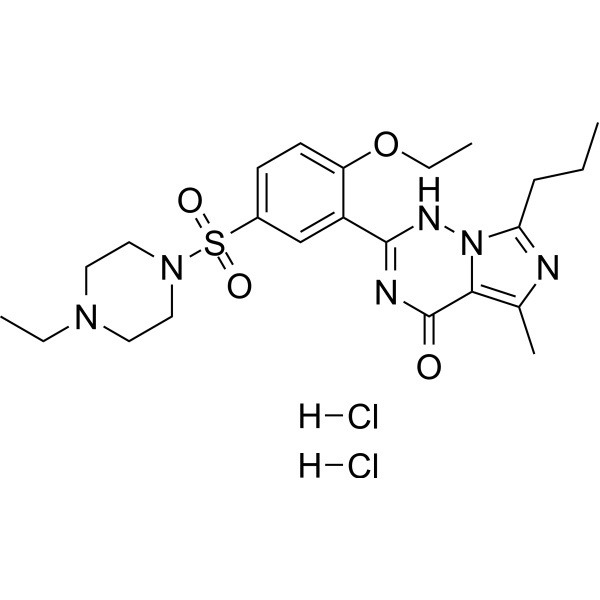 0 ImagesCat. No.: HY-B0442CCAS No.: 224789-15-5Vardenafil dihydrochloride is a selective and orally active inhibitor of phosphodiesterase-5 (PDE5), with an IC50 of 0.7 nM. Vardenafil dihydrochloride shows inhibitory towards PDE1, PDE6 with IC50s of 180 nM, and 11 nM respectively, while IC50s are >1000 nM for PDE3 and PDE4. Vardenafil dihydrochloride competitively inhibits cyclic guanosine monophosphate (cGMP) hydrolysis and thus increases cGMP levels. Vardenafil dihydrochloride can be used for the research of erectile dysfunction, hepatitis, diabetes-.
-
Avanafil dibenzenesulfonate
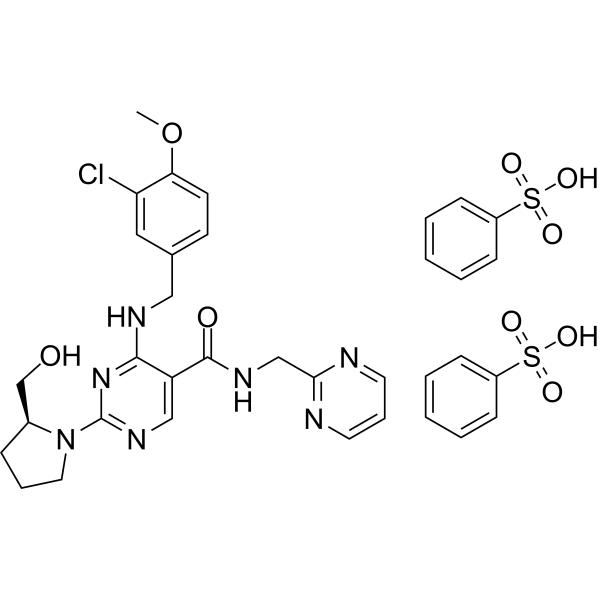 0 ImagesCat. No.: HY-18252ACAS No.: 330784-48-0Synonyms: TA1790 dibenzenesulfonateAvanafil (TA-1790) dibenzenesulfonate is a potent and selective phosphodiesterase-5 (PDE-5) inhibitor with IC50 values of 5.2 nM, 630 nM, 5700 nM, 6200 nM, 12000 nM, 27000 nM, 51000 nM and 53000 nM for PDE-5, PDE-6, PDE-4, PDE-10, PDE-8, PDE-7, PDE-2 and PDE-1, respectively. Avanafil dibenzenesulfonate activates NO/cGMP/PKG signaling-pathway to decrease loss in BMD, bone atrophy, and oxidative stress. Avanafil dibenzenesulfonate inhibits cyclic guanosine monophosphate (cGMP) hydrolysis and thus increases cGMP levels. Avanafil dibenzenesulfonate can be used for the research of erectile dysfunction and osteoporosis.
-
TPN729MA
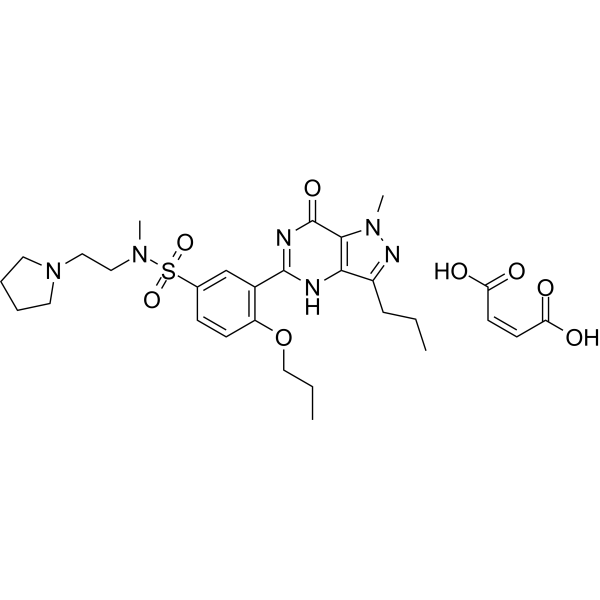 0 ImagesSynonyms: TPN729 maleateTPN729MA (TPN729 maleate) is a selective phosphodiesterase type 5 (PDE5) inhibitor with an IC50 value of 2.28 nM. TPN729MA affects erectile function and it can be used for the research of erectile dysfunction.
-
TPN729
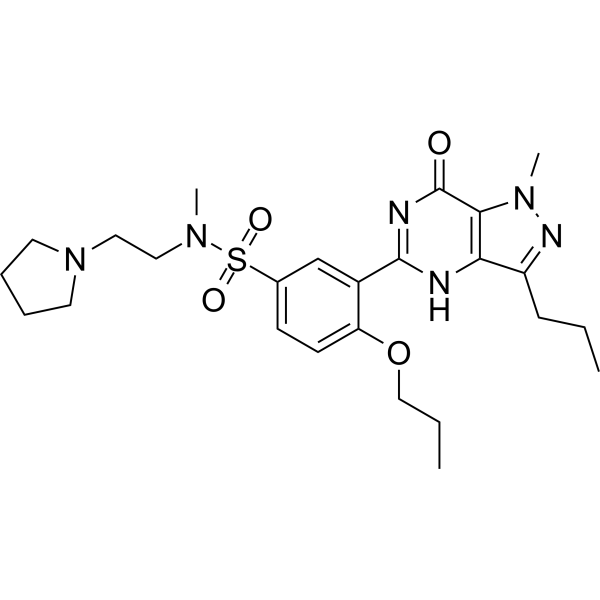 0 ImagesCat. No.: HY-116808CAS No.: 936951-20-1TPN729 is a selective phosphodiesterase type 5 (PDE5) inhibitor with an IC50 value of 2.28 nM. TPN729 affects erectile function and it can be used for the research of erectile dysfunction.
-
PDE5-IN-2
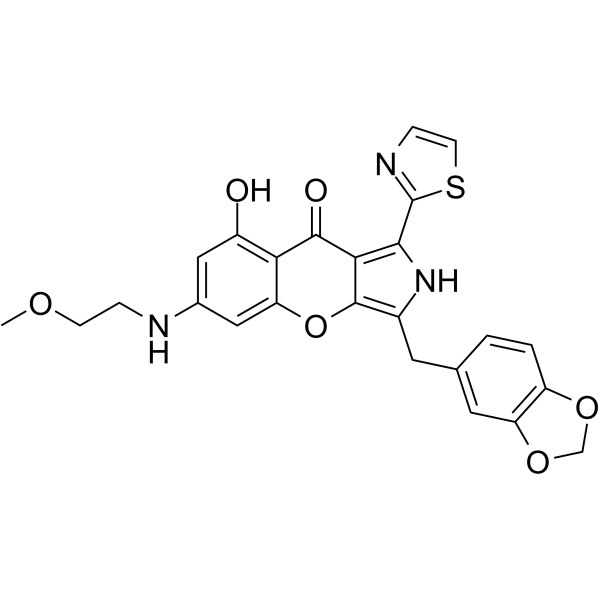 0 ImagesCat. No.: HY-112704CAS No.: 2244517-61-9PDE5-IN-2 is a potent, highly selective, and orally active PDE5 inhibitor, with an IC50 of 0.31 nM, less potently inhibits PDE2A, PDE10A, PDE4D2, and PDE6C, with IC50s of 106, 46, 43, 1.2 nM, respectively. Anti-pulmonary arterial hypertension activity.
-
PDEδ/NAMPT IN-1
 0 ImagesCat. No.: HY-172919CAS No.: 2976498-55-0PDEδ/NAMPT IN-1 (Compound 17d) is a dual inhibitor targeting phosphodiesterase 6 (PDE6) (KD=0.410 nM) and nicotinamide phosphoribosyl transferase (NAMPT) (IC50=2.21 nM). PDEδ/NAMPT IN-1 blocks KRAS-related signal transduction and interferes with the synthesis of nicotinamide adenine dinucleotide (NAD+), inducing apoptosis in KRAS mutant pancreatic cancer cells. PDEδ/NAMPT IN-1 is promising for research of KRAS mutant pancreatic cancer.
-
NTLiverTac PDE6D degrader-1
 0 ImagesCat. No.: HY-174379NTLiverTac PDE6D degrader-1 is a PDE6D NTLiverTac degrader with a DC50 of 4.09 μM. NTLiverTac PDE6D degrader-1 is formed by conjugating a PDE6D PROTAC degrader with the NTCP ligand Cholic acid (HY-N0324). NTLiverTac PDE6D degrader-1 triggers the ubiquitin-proteasome system-mediated degradation process by forming a complex with PDE6D and MDM2, inducing proteasome-dependent and NTCP-dependent degradation. NTLiverTac PDE6D degrader-1 inhibits PDE6D-dependent KRAS trafficking and suppresses KRAS-related oncogenic signaling cascades. NTLiverTac PDE6D degrader-1 inhibits the activation of the PI3K/AKT/mTOR signaling pathway and induces cellular Apoptosis. NTLiverTac PDE6D degrader-1 enters cancer cells via NTCP-mediated endocytosis. NTLiverTac PDE6D degrader-1 can be used in the research of hepatoblastoma (MDM2 ligand: (4R,5S)-Nutlin carboxylic acid (HY-128836); NTCP ligand: Cholic acid (HY-N0324); PDE6D ligand: Sorafenib (HY-10201)).
-
Deltazinone 1
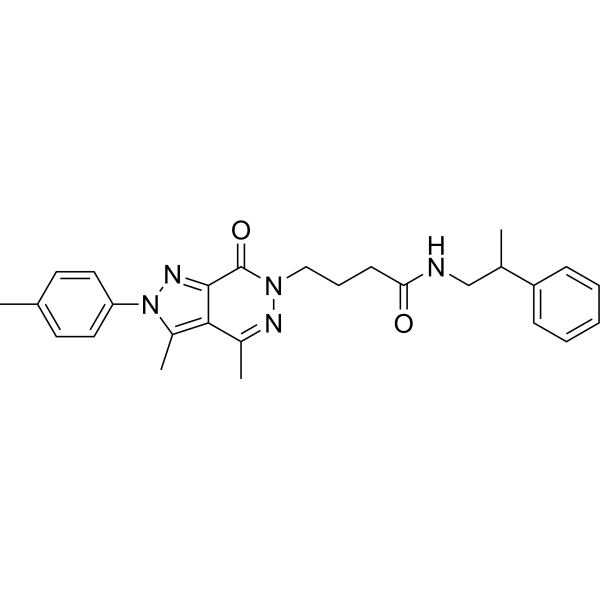 0 ImagesDeltazinone 1, a pyrazolopyridazinone, is a highly selective PDEδ inhibitor with a KD of 8 nM. Deltazinone 1 inhibits the PDEδ-Ras interaction. Deltazinone 1 shows a dose-dependent inhibitory response on proliferation in oncogenic KRas-dependent cell lines.
-
PDE5-IN-13
 0 ImagesCat. No.: HY-170435PDE5-IN-13 (Compound 14b) inhibits phosphodiesterase 5 (PDE5A) with an IC50 of 3 nM. PDE5-IN-13 is a potential candidate for PAH (pulmonary arterial hypertension) research. PDE5-IN-13 has high selectivity for targets over PDE1, PDE2, PDE3, PDE4, PDE7, PDE8, PDE9, PDE10, and PDE11. PDE5-IN-13 is orally active.
-
PDE5-IN-15
 0 ImagesCat. No.: HY-177298CAS No.: 366444-83-9PDE5-IN-15 (compound 21) is a xanthine derivative and PDE5 inhibitor, with IC50 values of 0.002, 0.180, 2.85 and 2.22 μM against hPDE5, bPDE6, bPDE1 and hPDE3, respectively. PDE5-IN-15 has good oral bioavailability in dogs. PDE5-IN-15 can be used in research on male erectile dysfunction.

-
PDE3/4-IN-4
 0 ImagesCat. No.: HY-181088CAS No.: 3088024-27-2PDE3/4-IN-4 is an orally active PDE3A and PDE4B inhibitor with IC50 values of 10 nM and 9.4 nM, respectively. PDE3/4-IN-4 shows selective activity relative to most other PDE family members. PDE3/4-IN-4 modulates the cAMP/PKA/CREB signaling pathway. PDE3/4-IN-4 inhibits pro-inflammatory factor IL-6. PDE3/4-IN-4 reduces expression of inflammatory markers in liver tissue. PDE3/4-IN-4 attenuates liver fibrosis. PDE3/4-IN-4 limits liver damage in cholestatic and sepsis-induced liver disease mice models. PDE3/4-IN-4 can be used for the research of liver injury, cholestatic liver diseases, sepsis-induced liver injury.
- 1
- 2



